How to Encourage a Child to Read Books?
A smartphone tempts with hundreds of colourful stimuli, while the black-and-white pages of a book may seem to a child... simply boring. As a parent, you're probably wondering how to win this uneven battle for your little one's attention without constant arguments, bans and coercion. The good news is that a love of literature doesn't have to be built by force – it can be cleverly nurtured by turning pressure into pure curiosity. Here's a practical guide that will help your child discover the magic of stories and make them start reaching for new titles all on their own.
What Does Reading Books Independently Give a Child?
Reading independently isn't just a moment of that longed-for peace and quiet for you, but above all a powerful boost for your child's development. Books work like the best free workout for the brain, bringing benefits that will pay off at every stage of life.
-
Vocabulary development. Children who regularly engage with literature hear and absorb up to several hundred more words than their peers, making it easier for them to express their own thoughts freely.
-
Training focus and patience. In a world overstimulated by screens, following a text line by line teaches long-term concentration on a single task.
-
Sparking imagination and empathy. Living through adventures alongside the characters allows a child to walk in someone else's shoes, helping them better understand their own emotions and those of others.
-
Success at school. Fluent reading with comprehension is the foundation that definitely makes it easier and quicker to absorb knowledge in every other subject.
How Long Should a Child Read Each Day?
Building a reading habit is like learning to ride a bike – the key to success here is the rule of small steps. Instead of immediately expecting your child to pore over a text for an hour, dose out reading time and adjust it to your little one's current stage of development and abilities.
|
Age / Child's stage of development |
Suggested daily reading time |
Goal and practical significance |
|
Beginner (learning to read) |
2-5 minutes |
Forming the first habit and getting familiar with letters without the risk of frustration. |
|
Early school age (approx. 7-10 years) |
15-20 minutes |
Intensive fluency practice and developing reading comprehension skills. |
|
Creating a lasting habit |
approx. 20 minutes |
The optimal daily goal that helps maintain a high level of intellectual development. |
What If a Child Doesn't Want to Read? – 5 Ways to Encourage Your Little One to Read Books
If your child reacts to the sight of a cover by running away, ease off the pressure – forcing them will backfire and put them off for years. It's time to change your strategy, drop the role of controller and apply clever methods that will awaken the natural, childlike curiosity in your little rebel.

Show That Reading Is Something Enjoyable
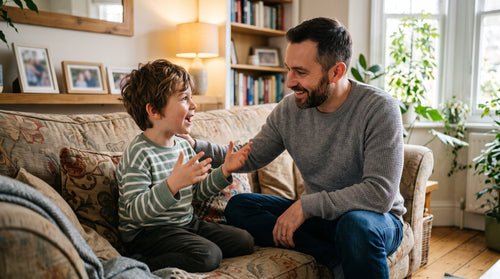
Children are excellent observers and learn best by imitating their parents' behaviour. If your little one never sees you relaxing with a book in hand, it will be hard to convince them that it's an appealing way to spend free time. Instead, read in front of your child for your own pleasure and make sure your shared evenings with a book are full of emotion. When you read aloud, change your intonation, modulate your voice, imitate animal sounds and react energetically to the plot twists. This little theatre will make the book start to feel associated with closeness, laughter and safe time with mum or dad.
Choose Books Suited to the Child's Age and Interests
Nothing discourages more effectively than a text that's too difficult, in which the child loses the thread of the story, or a topic that doesn't interest them at all. Give your little one full autonomy during a visit to the bookshop – even if they choose a title that seems rather unambitious to you. If your little one loves dinosaurs, football or a particular cartoon character, look for whole book series built around these passions. A proven trick for the reluctant ones is interactive books – with flaps, touch elements or tasks to complete, where reading naturally intertwines with dynamic play.
Create a Special Reading Corner
The home environment has a huge influence on the kinds of entertainment and toys your child reaches for spontaneously throughout the day. Set up a cosy, well-lit space in their room where books are literally within reach of little hands. Put in a low shelf or an attractive basket and display titles cover-forward (so-called face-out), which instantly catches the eye and sparks curiosity far more than dull spines on a high shelf. Add a few soft cushions, a warm blanket and a small night light to create a safe, magical oasis dedicated solely to winding down. Such an inviting corner will make your little one naturally start to pause there before bedtime.
Appreciate Your Child's Progress
Every single step, even the smallest, on the path to independent reading deserves your genuine praise and parental support. Praise your little one for bringing a book on their own, fluently reading a harder word or sticking with the text for the planned five minutes. Positive reinforcement effectively builds a child's self-confidence and makes them feel proud of their newly acquired skills. Absolutely avoid criticism when they struggle, and never compare them to peers who read faster or choose thicker volumes. To boost motivation, you can also bring in modern technology – mobile apps with a reading-time tracking feature (e.g. with a built-in reading meter) will let your child visually follow their daily achievements.
⮕ If you prefer offline solutions, you can build the habit using motivational stickers.
Show the Alternatives
If a traditional, densely printed volume frightens your child by its sheer size, break through that barrier with modern formats. Comics and graphic novels are an excellent bridge to the world of literature, as their rich visual presentation and short dialogues don't overwhelm the young reader from the start. Audiobooks, meanwhile, listened to during a car journey or before falling asleep, brilliantly spark the imagination, teach children to follow a multi-threaded plot and often awaken the urge to reach for the paper version of the story. For little gadget lovers, e-books on an e-ink reader are a great choice. Such a screen doesn't strain the eyes and makes reading a modern, appealing form of entertainment for a child.