How to Build a Healthy Relationship Between Your Child and Food
"No dinner, no dessert" or "just one more spoonful for mummy" – sound familiar? Every parent wants the best for their little one, and worrying about whether our child has eaten enough is a natural instinct. However, what lands on the plate is just as important as the atmosphere in which it is eaten. Wondering how to raise a little foodie who can listen to their own body and doesn't treat sweets like forbidden fruit? Find out how to wisely shape your child's eating habits so they pay off throughout their entire adult life.
What does a good relationship with food mean?
A good relationship with food is one in which food is seen as a natural source of energy and pleasure, rather than a tool for regulating emotions. It means that a child can eat according to their own appetite without feeling fear, pressure or guilt when reaching for something sweet. It is also the valuable ability to intuitively sense when the body is hungry and when it is already full. In practice, it is a state in which eating is simply a regular, neutral part of the day, rather than a cause of family conflicts or stress at the table.
How to develop a child's healthy relationship with food? – Tips
Shaping proper habits requires a good deal of patience from us as parents, as well as a shift in our own ingrained way of thinking. Here are some proven principles that will help you support the development of a healthy approach to food in your child every day.
1. Don't create pressure
Forcing a little one to clean their plate is the fastest way to disrupt their innate mechanisms of satiety. Remember the golden rule of the division of responsibility: as the parent, you decide what and when appears on the table, but it is the child who makes the final decision about whether and how much to eat. Trust your little one, even if on a given day they only nibble a few bites. If you let go of constant coaxing and comments, meals will no longer be associated with unpleasant coercion.
2. Don't use food as a reward or punishment
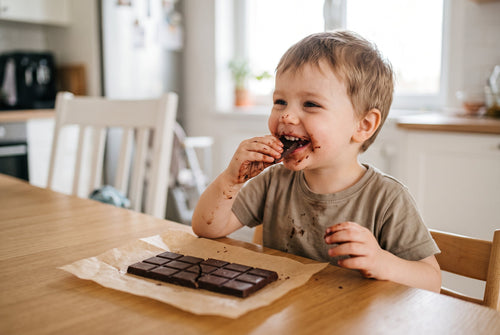
Blackmail along the lines of "you'll get a chocolate if you eat your vegetables" teaches a child that a healthy meal is an unpleasant obligation and that sweets are a reward. This approach very quickly leads to emotional eating and later problems with controlling cravings for unhealthy snacks. Eating should simply be a physiological activity, not a bargaining chip in everyday parenting negotiations. Instead of promising ice cream for good behaviour, reward your child with quality time together or an engaging new game.
3. Create a pleasant atmosphere around food
The shared table should be a place of relaxation, not a battlefield or an arena for checking who ate the most and the fastest. Make sure that during meals you turn off the television, put away phones and leave aside toys that needlessly distract your little one. Focusing on eating in a calm atmosphere allows a child to enjoy the taste and better recognise the moment they are full. Instead of commenting on the contents of the plates, use this time for a pleasant, relaxed conversation with the family about the day gone by.
4. Teach your child to recognise the signs of hunger and fullness
Children are born with an excellent, intuitive system of self-regulation – we adults just need to help them not lose it. Help your little one name the signals coming from their body by asking, for example: "do you feel in your tummy that there's no more room for anything else?". Never question your child's statement that they have already eaten enough, even if you think they have eaten too little. By respecting these boundaries, you teach them mindfulness and give them the tools to avoid overeating out of boredom in the future.
5. Allow your child some autonomy
Children are far more willing to reach for dishes they helped prepare and over which they had a genuine say. Give your child a choice within the framework you set, by asking, for example, whether they would prefer a sandwich with egg or with cottage cheese for breakfast today. Whenever possible, let them serve their own portions from the dishes or decorate their plates with fruit. This sense of agency builds their confidence and makes trying food a fascinating adventure.
6. Introduce new foods wisely
A natural reluctance towards new flavours, known as neophobia, is a common stage in the development of almost every little one. To familiarise your child with an unknown food, place it on the plate next to food they already know and really like, without exerting any pressure at all to swallow it. Be patient, because sometimes it takes a dozen or more attempts and exposures before a child dares to take a bite. If they don't enjoy a particular ingredient in its boiled form, after some time offer it in a different form, for example roasted with their favourite seasonings.
7. Lead by example
Children are excellent observers and are far more likely to imitate what you do than to obediently do what you ask of them. If you want your child to happily eat vegetables and a variety of foods, you yourself need to reach for them regularly and show that you enjoy them. Pay attention, too, to how you talk about your own body – complaining about calories or "eating away" stress with sweets will not escape a child's notice. By working on your own healthy and flexible relationship with food, you give your little one the best possible role model to follow.