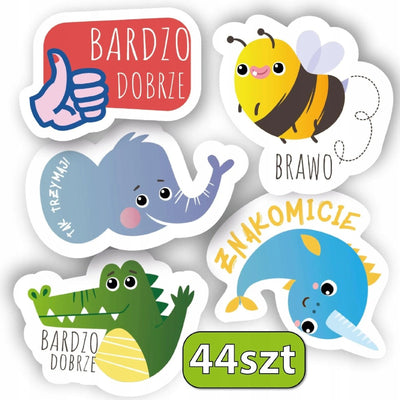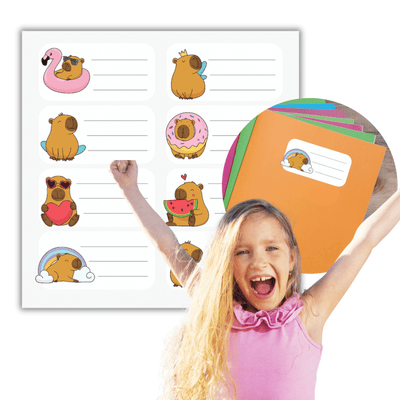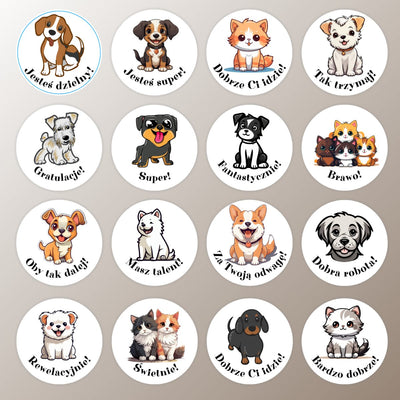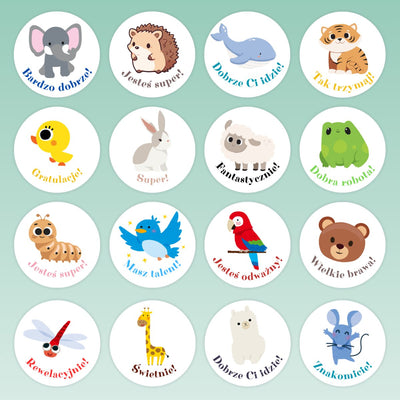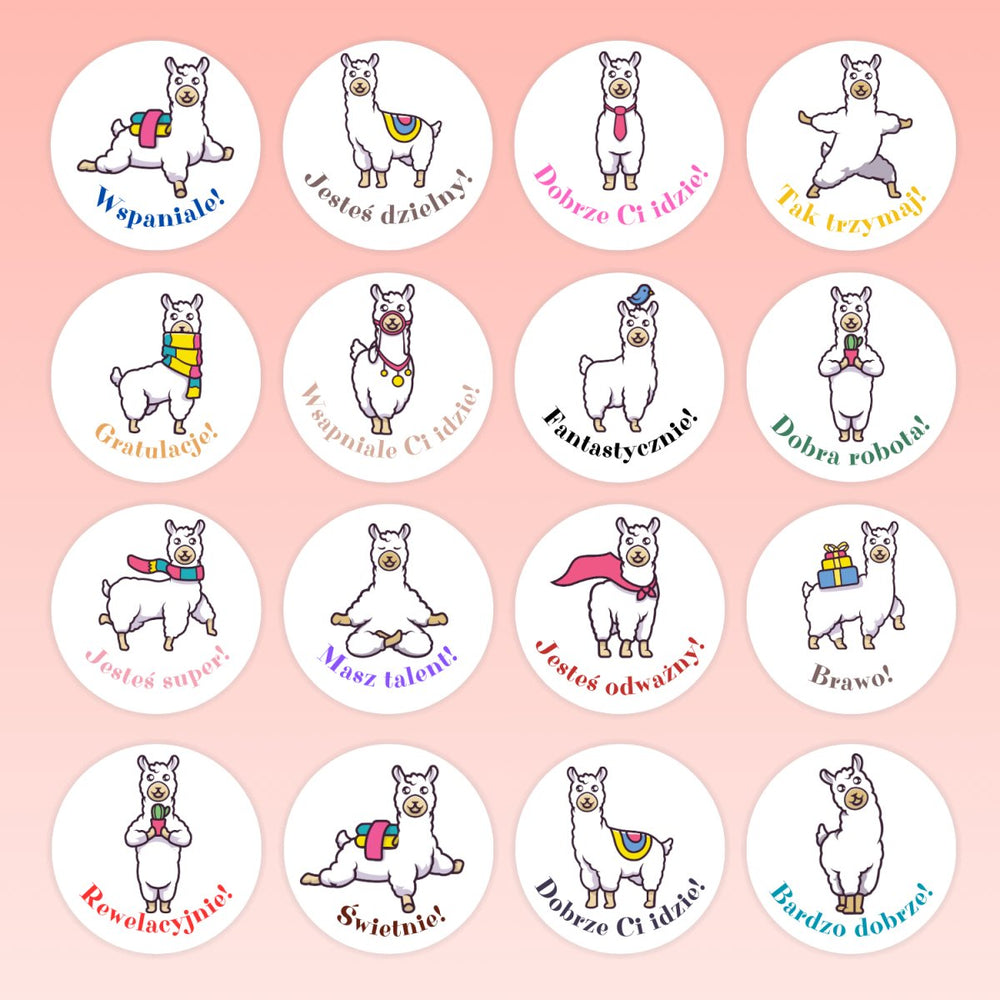


Motivational SCHOOL ALPACA Reward Stickers for Kids - 16 pcs
Polish brand
Created by parents. Reliable service and support at every step.
Transparent video
We show every product in real video.
Branded box
Aesthetic packaging, Polish instruction manual, perfect for a gift.
24h shipping
Orders placed before 2:00 PM are shipped the same business day.
Key points about motivational ALPACA stickers at a glance
The sheet contains 16 motivational stickers with cute alpacas and Polish text. Each sticker is printed on safe paper that easily sticks and peels off. The alpaca theme makes children eager to use this reward system.
Key points: the stickers are designed for school-age children as a form of positive motivation. They can be stuck on notebooks, backpacks, books or pencil cases. The paper surface leaves no traces when removed.
These motivational stickers for kids work like small medals for achievements in learning and behavior. The designs are colorful, friendly and immediately catch the attention of young students.

Why are motivational stickers so effective in education?
Children learn through positive reinforcement much faster than through punishment. School alpaca stickers work on the principle of immediate reward - the child sees the effect of their action right away. This builds a connection between good behavior and pleasant feelings.
The visual reward system directly affects the student's self-esteem. When a child receives a sticker, their brain releases endorphins - happiness hormones. This way learning is associated with something pleasant, not an unpleasant obligation.
Key point: educational stickers for school help children understand what they are being rewarded for. Each sticker is a specific signal - 'you did something well'. This way students consciously repeat positive behaviors.
Regular receipt of small motivational rewards for students increases their internal motivation to learn. This doesn't create dependency on external rewards, but teaches children to notice their own progress.
How to build an effective reward system using stickers?
Set clear rules - what exactly will the child get a sticker for. Specific behaviors work best: completing homework, helping a classmate, being active in class. Avoid rewarding obvious things like coming to school.
Give stickers immediately after positive behavior, don't wait until the end of the week. The child must see a direct connection between their action and the reward. Delayed rewarding reduces the system's effectiveness.
Introduce a point system - one sticker equals one point, and a certain number of points equals a bigger reward. For example: 5 stickers = an extra 15 minutes of favorite game time. This teaches children planning and patience.
Key point: don't reward every smallest action. The motivation system for children should highlight real achievements and efforts. Otherwise the stickers will lose their motivational value.

Key facts and specifications of ALPACA stickers
In the set you receive one sheet with 16 colorful stickers. Each sticker features a cute alpaca with motivating text in Polish. The dimensions of individual stickers are adapted to children's needs - large enough to be visible, but small enough to fit on a notebook.
Material: high-quality paper with safe adhesive. Contains no toxic substances, meets safety standards for children's toys. The stickers peel off easily without leaving traces on most surfaces.
Application: school notebooks, books, backpacks, pencil cases, motivational boards at home. The adhesive holds the sticker securely but allows gentle removal without damaging the surface.
Worth knowing: colors are vivid and durable, don't fade under light. Text is printed in black ink, so it remains legible even for children with vision problems.
Are paper stickers better than vinyl stickers?
Paper stickers have a key advantage for children - they are much easier to remove. A child can easily move a sticker if they make a mistake or want to relocate it. Vinyl stickers often tear during removal.
Paper is more eco-friendly than vinyl and safer in contact with children's skin. It contains no plasticizers or other chemical additives that could cause allergies. This is important when children frequently touch the stickers.
The adhesive on paper stickers is gentler, so it doesn't damage notebook or book covers. Parents will appreciate that no sticky residue remains after removal that requires cleaning with solvents.
Vinyl stickers seem more durable, but in the case of motivational rewards for students, durability is not a priority. More important is ease of use and child safety during play.
What can you stick motivational stickers on?
The most commonly used surfaces are school notebook covers - stickers look great there and are visible to the child daily. Backpacks are the second popular place where stickers become decoration and a source of pride.
Books and textbooks are another place - but careful, stick only on covers, never on pages with text. Pencil cases, sharpeners, rulers - all these school accessories gain new dimension with colorful alpacas.
At home you can create a motivational board on the fridge or wall. Stick successive alpacas for completed homework, cleaning the room or helping in the kitchen. The child will have their own place for achievements.
Key point: avoid sticking on matte, rough or porous surfaces - stickers may not adhere well there. Smooth surfaces like plastic, lacquered wood or smooth-textured paper work best.

Comparison table of motivation systems for children
| Motivation system | Effectiveness | Cost | Ease of use | Effect durability |
|---|---|---|---|---|
| Motivational stickers | Very high | Low | Very easy | Medium |
| Text stamps | High | Medium | Easy | Low |
| Point system | High | Very low | Medium | High |
| Stars on board | Medium | Low | Easy | Low |
| Small gifts | Very high | High | Difficult | Very low |
| Verbal praise | Medium | Free | Very easy | Very high |
Stickers perform best in the cost-effectiveness category. They provide immediate, visual satisfaction without large expenses. A point system can be a supplement, but requires more organization from adults.
At what age does a child respond best to motivational stickers?
Preschoolers (3-5 years) love stickers mainly for their colorful appearance. At this age, immediate reward and joy from sticking matter most. Alpacas are ideal - friendly designs that don't frighten small children.
Students in grades I-III (6-9 years) are the group that responds most strongly to the sticker system. They can already understand reward rules and consciously work toward more stickers. This is the age when children build learning habits.
Grades IV-VI (10-12 years) still appreciate stickers but need a more sophisticated system. Stickers should be part of a larger reward or lead to specific privileges, like extra computer time.
Key point: after age 13, stickers may no longer be attractive. Teenagers prefer intangible rewards - more freedom, parental trust, ability to make their own decisions. The system must be adapted to the child's age.
Most common parent questions about motivational stickers
Don't stickers make children dependent on external rewards?
Research shows that short-term sticker use doesn't harm internal motivation. The key is gradually transitioning from stickers to verbal praise, then to satisfaction from the achievement itself.
How often should I give my child stickers?
Initially reward every positive behavior you want to reinforce. After 2-3 weeks, switch to rewarding every second or third positive situation. Gradually extend the intervals.
Do stickers work long-term?
Stickers themselves are a short-term tool. Long-term effect occurs when the child learns positive behaviors and starts repeating them willingly. Stickers are just the beginning of this process.
What to do when the child stops responding to stickers?
This is natural. Change the system - introduce bigger rewards for collecting a certain number of stickers or switch to other forms of motivation. Don't force continuation when the child has clearly lost interest.
Step by step: how to introduce motivational stickers at home?
Step 1: Set clear goals
Choose maximum 3 behaviors you want to reinforce. For example: completing homework, tidying toys, polite behavior at the table. More goals at once overwhelm the child.
Step 2: Create a motivational board
This can be a simple A4 sheet stuck on the fridge. Draw a table with days of the week and behavior names. Here you'll stick successive alpaca stickers.
Step 3: Explain the rules to the child
Show the stickers, explain what they'll get them for. The child must understand the system to participate in it. Let them stick the first sticker for fun.
Step 4: Consistently reward
For the first week give stickers immediately after positive behavior. Don't wait until evening - immediacy of reward is crucial for young children.
Step 5: Gradually withdraw the system
After a month start rewarding every second good behavior. After two months transition to verbal praise. The goal is for the child to learn good habits without external rewards.