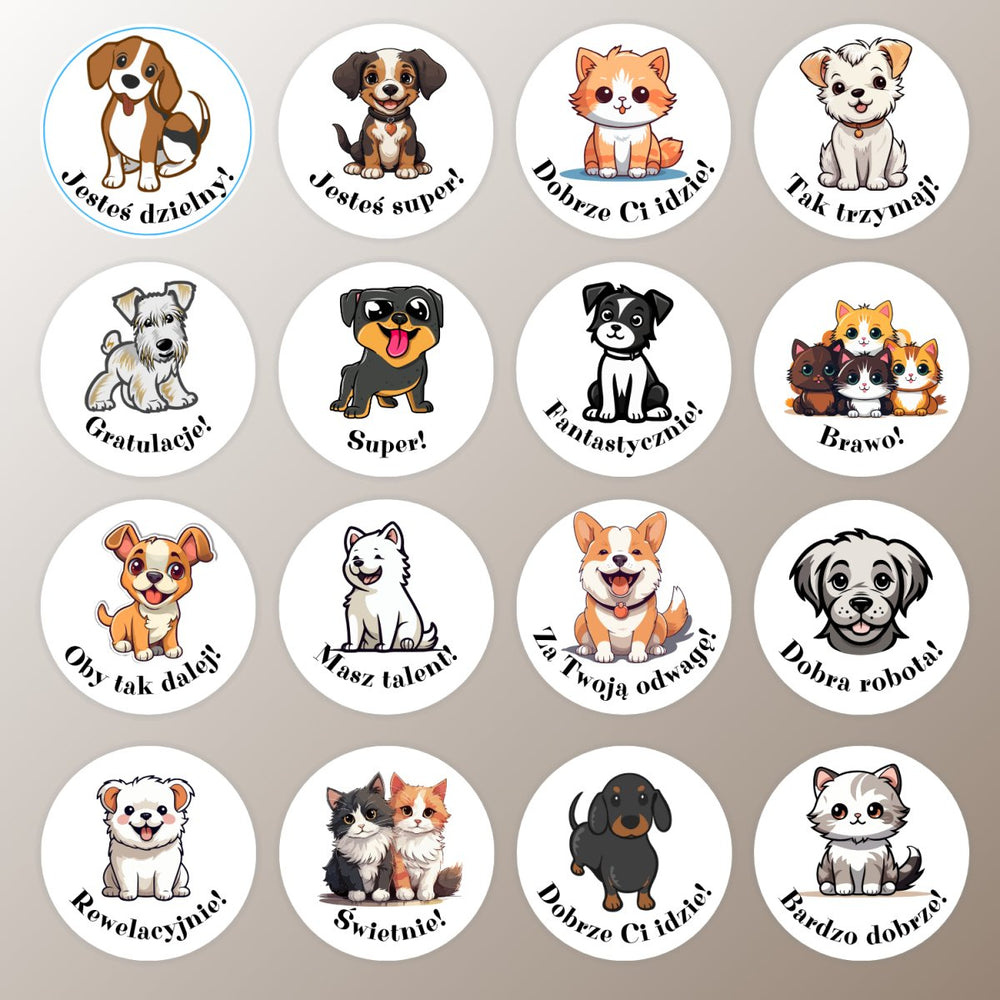


Motivational Stickers PUPPIES AND KITTENS FOR SCHOOL - GOOD JOB!
Polish brand
Created by parents. Reliable service and support at every step.
Transparent video
We show every product in real video.
Branded box
Aesthetic packaging, Polish instruction manual, perfect for a gift.
24h shipping
Orders placed before 2:00 PM are shipped the same business day.
Why motivational stickers PUPPIES AND KITTENS are a hit in every school?
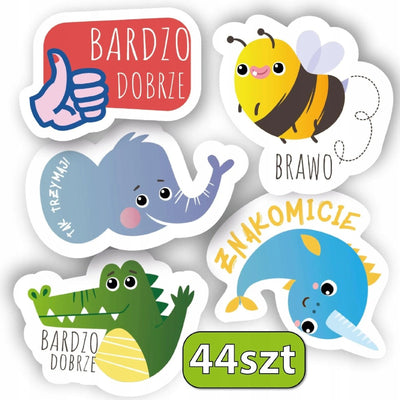
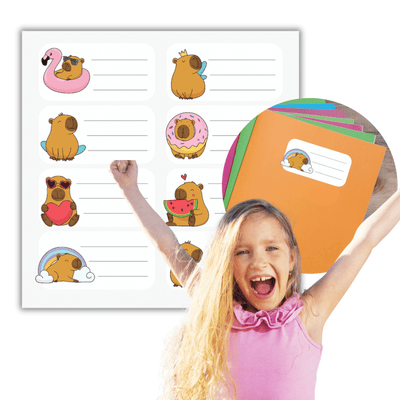
Motivational stickers with adorable puppies and kittens are a simple way to build a positive learning atmosphere. One sheet contains colorful reward stickers for kids with the inscription "GOOD JOB!" that work like small medals for achievements. Children love sticking them on notebooks, pencil cases or backpacks - each sticker reminds them of success and motivates further action. These cute stickers for notebooks printed on paper will stick to any flat surface. It's a tool that works well in the hands of teachers, parents and educators - builds confidence and makes learning associated with something pleasant.

How do motivational stickers affect child development?
A reward system for students based on motivational stickers for students is a proven method of building positive associations with learning. A child who receives a sticker for good work learns to recognize their successes and derive joy from them. It's a mechanism that reinforces desired behaviors - the more often a child experiences positive evaluation of their work, the more willingly they engage in subsequent tasks.
Teacher reward stickers classroom work on several psychological levels. First, they provide immediate gratification - the child immediately sees the effect of their effort. Second, they build self-esteem through a clear message: "what you did was good". The charm of animals makes the reward associated with something nice and friendly.
Key point: this type of positive reinforcement teaches the child that effort pays off. Instead of punishing mistakes, we focus on appreciating progress. This approach builds internal motivation - the child stops learning only "for grades" and begins to find satisfaction in the very process of learning.
What do you get in the GOOD JOB sticker set?
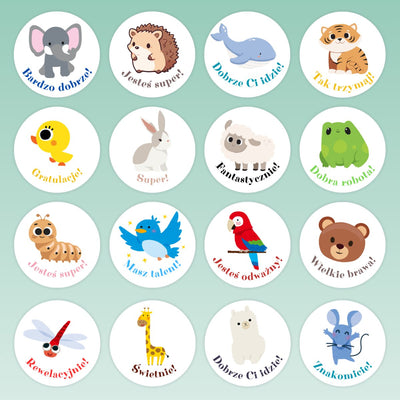
The kids sticker pack includes one sheet of motivational stickers featuring puppies and kittens. Each sticker bears the inscription "GOOD JOB!" and has been designed to appeal to children of various ages. The colorful animal graphics make the reward look attractive and encouraging.
These inspirational stickers for kids are printed on high-quality paper that ensures durable adhesion to various surfaces. A child can stick the sticker on a notebook, book, pencil case, backpack or even lunch box - anywhere they want to have a reminder of their success. Paper material is also a safe choice for the youngest ones.
The size of individual stickers has been selected to be clearly visible but not too large. This way they fit in most places where children want to place them, while being a clear sign of achievement.

Key facts about motivational stickers PUPPIES AND KITTENS
| Parameter | Value |
|---|---|
| Set contents | One sheet of stickers |
| Graphic theme | Puppies and kittens with "GOOD JOB!" text |
| Material | Paper |
| Purpose | Motivational rewards for students |
| Application | School, home, kindergarten |
| Age group | School-age children |
| Safety | Safe for children |
Most important: the stickers are suitable for sticking on notebooks, backpacks, books, pencil cases and other school supplies. The paper structure ensures they adhere to most smooth surfaces without risk of damage.
How to create an effective motivational system with stickers?
The first step is establishing clear reward criteria. A sticker should be a response to a specific achievement: solving a difficult task, helping a classmate, organizing the workspace or simply putting effort into learning. It's important that the child understands what they're getting the reward for.
Give the sticker immediately after noticing positive behavior. Delay weakens the motivational effect. Tell the child exactly what they did well: "You get a sticker for working so patiently on this task" instead of a general "for good work".
Establish a progression system. Maybe after collecting five stickers the child receives an additional reward? Or maybe stickers serve as "currency" to exchange for small privileges? It's important not to overdo it - the sticker itself should be valuable.
Key point: remember to gradually reduce the frequency of rewards. Initially reward often, then only for bigger achievements. This teaches the child internal motivation.
Comparison of motivational stickers - which option is best?
| Type of reward | Advantages | Disadvantages | Effectiveness |
|---|---|---|---|
| Motivational stickers | Cheap, easy to use, children love them | May lose effectiveness if overused | High |
| Sweets | Immediate gratification | Unhealthy, short-term effect | Medium |
| Toys | Long-lasting joy | Expensive, child may get used to them | Medium |
| Verbal praise | Free, builds relationships | May not be enough for all children | High |
| Points/tokens | Flexible exchange system | Complicated for younger children | High |
Educational good job stickers combine advantages of several systems: they're visual like toys, cheap like praise, and can be collected like points. Children can stick them wherever they want, giving a sense of control over the reward.

Are motivational stickers safe for children?
PUPPIES AND KITTENS motivational stickers are made from safe paper that contains no harmful substances. The adhesive used in production is non-toxic and suitable for items that children have direct contact with. Stickers can be safely applied to notebooks, books and other school supplies.
The paper structure of stickers eliminates the risk of cuts that could occur with harder materials. After removal, they don't leave permanent marks on most surfaces, so children can re-stick them without damaging objects.
Good to know: stickers don't contain small, protruding elements that could pose a choking hazard. Size and shape have been selected with the safety of youngest users in mind. The graphics with puppies and kittens are friendly and contain no elements that could frighten a child.
In which situations is it worth rewarding a child with a sticker?
A sticker is an ideal reward for effort put into learning, regardless of the final result. A child who worked long on a task deserves recognition even if everything didn't turn out perfectly. Reward trying new things, asking questions, helping classmates or simply not giving up in difficult situations.
They work great in situations when a child overcame their limitations: raised their hand in class for the first time, organized their backpack independently or completed a boring exercise. A sticker can be a reward for positive social behavior: apologizing to a friend, sharing supplies or simply being kind to others.
Key point: don't reward only perfect results. Progress and effort are most important. A child who improved from 2 to 3 deserves a sticker as much as one who got a 5. This teaches that development matters, not just the final result.
Most common parent questions about motivational stickers
How many stickers per day can I give my child?
Initially you can reward more frequently - even 2-3 stickers daily for different achievements. Over time it's worth limiting to 1 sticker daily or every other day, so they don't lose their motivational value.
What to do when a child stops being excited about stickers?
This is a natural phenomenon. You can introduce a level system: e.g., after collecting 10 stickers the child receives a bigger reward. Or change stickers to different designs to spark interest again.
Won't stickers make the child dependent on external rewards?
Not with wise use. Key is gradually reducing reward frequency and focusing on effort, not just results. Over time the child learns to derive satisfaction from learning itself.
From what age can you use motivational stickers?
Stickers work well with 3-year-olds, but have greatest effectiveness with children aged 4-10. Older children may need a more complex motivational system.
How long do children keep stuck-on stickers?
It depends on the child. Some collect them for years, others re-stick them in different places. What matters is that the sticker itself serves as a reminder of success.
Can I use stickers to reward household chores?
Yes, stickers work great as rewards for helping at home. You can reward cleaning the room, setting the table or taking out trash - every contribution to family life is worth appreciating.