Why Do Children Need Active Play?
For a child, movement isn't just entertainment – it's natural fuel for brain development, a strong immune system and healthy bones. A lack of it quickly translates into poor posture, concentration problems and difficult emotions. The good news? You don't need expensive, structured training sessions – the key is spontaneous play both at home and outdoors. Read the article and find out how easy it is to meet the WHO guidelines using a simple activity pyramid.
What Are the Effects of a Lack of Movement in Children?
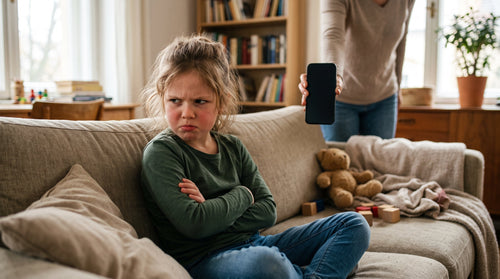
When a child spends most of the day sitting down – first at a school desk, then in front of the TV or with a phone in hand – their body begins to send out warning signals. A lack of the right amount of activity doesn't simply mean "weaker fitness." The consequences can be far more serious:
-
Poor posture – Prolonged sitting weakens the back and abdominal muscles, leading to scoliosis, contractures and future spine problems.
-
Delayed motor development – Children who move very little show noticeable problems with coordination, balance and overall agility.
-
Difficulties with learning and concentration – An oxygen-deprived brain works more slowly. A lack of movement directly translates into problems focusing attention at school or nursery.
-
Emotional problems – Excessive restlessness may appear (a child "bursting" with energy they have no way to release) or, on the contrary, apathy and constant fatigue.
-
Lifestyle diseases – A slowed metabolism, a risk of constipation, and in the longer term excess weight, obesity and cardiovascular problems.
Why Are Movement and Physical Activity So Important in Childhood?
Movement isn't just a way to "tire out" a child so they fall asleep faster (although that's a pleasant side effect too). Above all, it's fuel for the whole body. Here are the key areas that activity influences:
1. Development of the brain and nervous system
While jumping, playing tag or climbing, thousands of new neural connections form in a child's brain. Movement stimulates sensory integration, teaches the brain to manage emotions and improves memory. Interestingly, simple games that involve imitating the sounds and movements of animals (such as a frog or a lion) also engage the mouth and... support proper speech development.
2. Building a strong body
In childhood, bones and muscles grow intensively. Running and jumping increase bone density, which protects against osteoporosis in adulthood. In addition, the development of so-called gross motor skills (whole-body fitness) is the foundation for developing fine motor skills – the precise movements of the hands and fingers that are essential for learning to write or draw.
3. A protective shield for immunity
Regular movement improves blood circulation, so nutrients and oxygen reach the cells faster. Active children have a stronger immune system, fall ill less often, and if they do catch an infection, they usually experience it much more mildly.
4. Mental health and self-confidence
Movement releases endorphins – the happiness hormones. It helps a child relieve stress, teaches perseverance and how to cope with defeat in team games, and builds a sense of self-worth.

What Is Active Play?
Many parents fall into the trap of thinking that a child's physical activity has to mean expensive, structured sports classes three times a week under the eye of a coach. Nothing could be further from the truth.
Active play is any form of activity that brings a child joy and engages their body. It's natural, spontaneous and often doesn't require any specialist equipment.
Active play includes:
-
Jumping in puddles on a rainy day (all you need are wellies and a raincoat).
-
A homemade obstacle course made from cushions, chairs and blankets.
-
Classic games such as hopscotch, Chinese jump rope, hide-and-seek or "statues" in the yard.
-
Dancing to your favourite music in the living room.
-
Trips to the playground together – climbing frames and swings are brilliant gymnastics equipment.
-
And even... helping with everyday chores. Letting your little one carry dishes to the table or tidying up toys together is also a great way to keep them active.
What Kind of Movement Is Right for a Child? – A Pyramid by Age
How can you plan a child's activity wisely throughout the week? It's worth following the principles of the physical activity pyramid, which shows what should form the basis of each day and what should be strictly limited.
|
Activity level |
Type of activity / Examples |
Frequency |
|
BASE (Daily) |
Walking (even with a baby in a pram), taking the stairs instead of the lift, spontaneous play, helping around the house. |
Every day, as much as possible |
|
LEVEL 2 (A few times a week) |
Outdoor play, riding a scooter, cycling, roller skating, playing ball in the garden or at home. |
Regularly, 3-5 times a week |
|
LEVEL 3 (Organised) |
Swimming at the pool, dance classes, movement and rhythm sessions, corrective gymnastics, martial arts or a football club. |
1-2 times a week |
|
TOP (To be limited) |
Watching cartoons on TV, using a tablet, phone or computer, sitting still for long periods. |
Limited as much as possible |
#Good to know: The World Health Organization (WHO) recommends that children and teenagers (aged 5-18) spend at least 60 minutes a day on moderate physical activity.